The Zildjian Alchem-e Kit
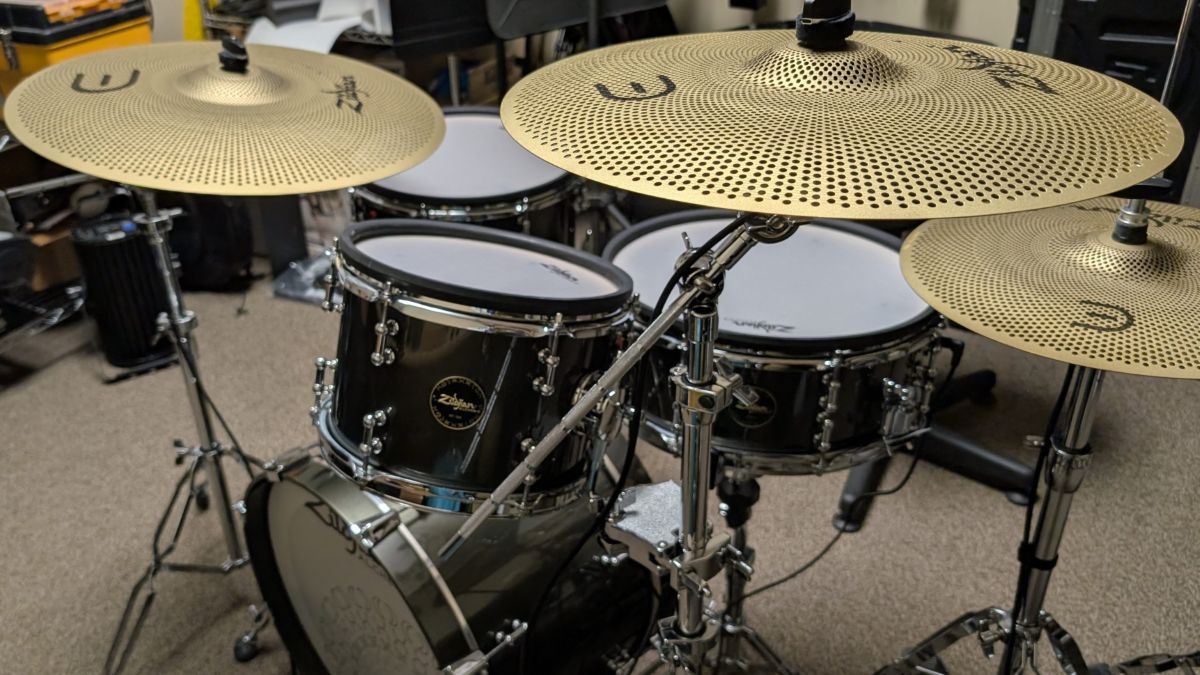
Table of Contents
We've used an acoustic drum kit for years at our church, and for most of those years without a drum shield (it made very little difference in the overall volume). The kit sounds great, but we're always right on the edge of our volume limit. Our drummers have learned to play to the room well, and we can bring up the band to match the drums and get a great sound, but our sound techs end up with very little control - there's no flexibility with the overall dynamic range except what's dictated by the drummer.
We've tried lots of alternative sticks, different drum tunings, cymbals, etc. Each of these things can certainly help reduce volume, but at the end of the day, drums are just a loud instrument and there's only so much you can do to quiet them and still get the sound you're after.
Why even consider an e-kit?
Electronic drums are a strong alure for churches that, like ours, have historically struggled with keeping drum volume under control. Most drummers don’t love being asked (or told) to reign in their playing, or being asked (or told) to use brushes or rods instead of sticks. And while drum shields or full enclosures can be useful in limited situations, they often create just as many problems as they solve. Electronic drums sound like the perfect solution. That is, until a drummer actually plays an e-kit. If your drummers have played e-kits from years past, they probably associate them with an unnatural feel, artificial sound, and an overall poor compromise for the real thing.
However, electronic drum kits have seen some serious improvements over the past several years, and one in particular caught my attention - the Zildjian Alchem-e kit. The primary draw of this kit that sets it apart from most others is that is uses metal cymbals, not rubber pads. While the use of mesh heads on e-kits has done a great job mimicking the feel and playability of a real drum head, rubber cymbals feel like, well, rubber cymbals. More of a "thwack" or a "doink" than a "splash" or a "ping". Rubber cymbals can certainly trigger great sounding samples, but they don't come close to replicating the feel of hitting a real cymbal. Zildjian has attempted to solve this by using real, low-volume cymbals with integrated sensors to provide a true cymbal feel.
Another advantage of metal cymbals is that the actual acoustic sound coming from the cymbals sounds like a cymbal and doesn't sound like a stick hitting a plastic slab. This makes it easier to blend any acoustic volume (which is minimal) from the kit with the samples coming from the sound system. You don't run into a situation where congregants hear both a rubber stick slap along with a sampled cymbal sound.
I was intrigued enough by what Zildjian has attempted that I purchased the kit for our drummers to try out. I wanted to see if it would be a useful tool for us and if our drummers would actually enjoy playing it. I tend to do lots of research before making purchases like this, but I had a very hard time finding many user experiences with this kit, so I wanted to provide some insights from our own time with the kit so you can determine it if it might be a good solution for your church. I'll break the remainder of the article up into four sections: our approach to testing the kit, the sound, the feel, and the overall user-experience.
Our Approach
I ordered a Zildjian Alchem-e Gold kit from Guitar Center after confirming that we could indeed bang around on the kit for 45 days and still return it to our local Guitar Center store if we decided we didn't want to keep it. I set it up in our small AV storage closet and had all of our drummers come spend some time playing it. I made it very clear that I had not made a decision to switch to an e-kit yet - I wanted their buy-in first. Each drummer spent at least a solid hour or so playing with different sounds, adjusting trigger settings, and just getting used to the nuances of the kit. All of them came away impressed (though not necessarily convinced), especially with the feel of playing the kit, which I'll cover in more detail below.
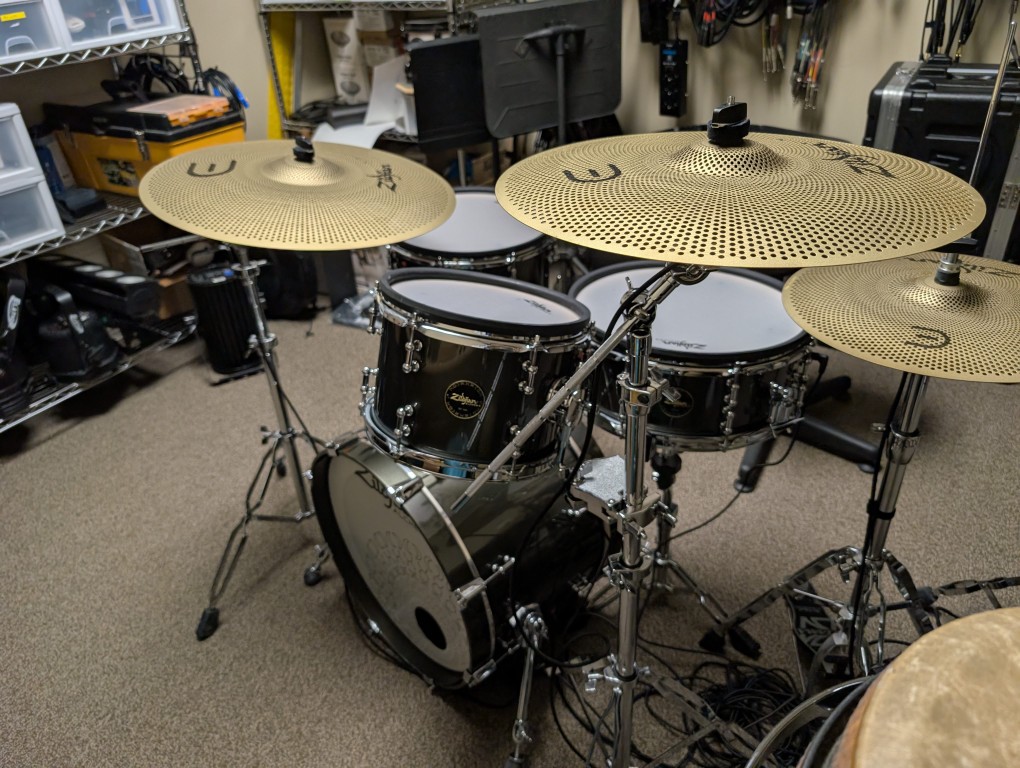
The next step was to set it up in our auditorium and see what it sounded like through our sound system. We had six mics on our acoustic kit (kick, snare, rack tom, floor tom, and two overheads) and to keep things simple, I replicated that arrangement with the outputs and routing on the Zildjian module. This meant no repatching at our console and a familiar layout for our sound techs.
I spent some time choosing sounds for each drum and cymbal that I thought would work well for our room and for our style, then recorded some patterns and played them back through our sound system to dial in EQ and compression on the console, getting the drums to a place where I thought they sounded good by themselves in the room.
We then took the plunge and trialed them at a rehearsal and on the following Sunday morning during services as well. There was certainly a bit of a learning curve for the FOH tech since he had FULL control over the sound of the drums with no competing acoustic volume from the stage.
Our Experience
The Sound
The kit sounds great, but I won't pretend that a discerning ear will be fooled into thinking it's an acoustic kit. There are two reasons for this. Firstly, there is an aural perception problem where your brain expects to hear a certain amount of sound from the kit itself. When you only hear it out of the sound system, there's a weird disconnect that makes you realize something isn't quite right. In a large enough room, at a high enough volume, or at a great enough distance, this phenomenon goes away, but I imagine it will also fade as listeners simply get used to it. I'm not suggesting that it's a problem, but it does let you know that it's an electronic kit.
Secondly, while the samples in the module, especially the cymbals, sound great, they just don't have enough subtle variance from one hit to the next to be truly convincing. This is primarily apparent with the snare drum. A single hit sounds amazing, but hit the snare several times in quick succession and you'll hear the "machine-gun" effect that many electronic drums suffer from.
I haven't experimented too much yet with using MIDI from the Alchem-e module to a VST, but a quick test in EZDrummer3 showed a lot of promise. EZDrummer3 already has a midi map configured for the Zildjian e-kits, so there's no manual mapping of triggers to samples required. I'm definitely planning to explore this more, because VST instruments tend to have much larger sample libraries than drum modules and have the potential to offer a more realistic and nuanced sound than the sounds built into the module.
While the sound isn't perfect, it's still very good, especially when mixed with the rest of the band. After the first Sunday we tested the kit during services, we had several people compliment the mix, saying that the mix was tighter and more balanced. I'm not convinced that everyone who commented knew that we had even swapped out the drum set. They were just hearing a noticeable and positive difference.
The User Experience
Using the Zildjian module is a bit of a mixed experience. In the days of high refresh displays and buttery smooth animations on our phones and computers, the sluggish nature of the module's touchscreen feels like it's from ages past. Likewise, loading samples takes longer than expected.
When browsing kits, you can easily scroll through the list, then press a button to load the kit, which understandably takes a few seconds. This is fine. However, when browsing samples for a specific drum, the samples are loaded automatically as you cycle through the list. If you linger more than about a second on a list item, it pauses and takes a couple seconds to load the sample. If you move quick enough, you can move through the list without pausing to load each sample, but trying to quickly navigate through the list and audition just the samples you want to can be very frustrating. It would help if they could either load the samples much quicker, or simply treat it like selecting drum kits, where you scroll through the list then press a button to load the sample. This would make for a far better experience.
On a positive note, the trigger settings are thorough and the visual feedback on the touchscreen for the zone and velocity being triggered is very helpful. It makes it quick and easy to dial in trigger settings to fit your playing style. And that leads to an important point: you absolutely must take the time to dial in trigger settings to fit your playing style. When you first power up the unit, you can select one of three trigger presets, based on a light, medium, or heavy playing style. However, we still had to do some extensive tweaking, particularly for the cymbals, to get them to respond naturally.
Every drummer will likely have slightly different playing styles and may therefore need slightly different trigger settings. The module does allow saving trigger and kit presets to a USB stick, which is included, but there could be some improvements with the process. You can't currently rename presets, and the available save files are 001-999, so each drummer will have to remember a number associated with their preset. Additionally, recalling a trigger preset requires a restart of the module, so it takes a minute or so to switch and get powered back up.
Finally, I have to mention a rather strange phenomenon that almost caused me to return the kit. As I mentioned, I initially had the kit setup in our AV storage room. Most of the time this room is kept at 55° F, except when the building is occupied for a Sunday service or some other event during the week. I don't typically bother to turn on the heat when I'm working in that room, so most of my early testing with the kit was done while it was very cold. I noticed that almost every time I powered on the module, the cymbals would randomly trigger, even when I wasn't sitting at the kit. Additionally, some of the zones would sometimes be misconfigured upon powering on - the hi-hat would trigger the ride bell, or the crash wouldn't register at all. The ghost triggers would slowly become less frequent after several minutes, and usually restarting the module once or twice would correct the problem. I thought perhaps it had to do with expansion and contraction of the cymbals, but it would happen even without any of the cymbals or drums plugged into the module. However, I found that if I gave the room (and presumably the module) ample time to warm up first (at least into the mid 60's), then turned the unit on, it wouldn't exhibit any of the odd behavior. I do plan to follow up with Zildjian to see if they can shed any more light on whether that's known behavior or if there's something wrong with the module we received. So if you're planning to use this kit in the cold, maybe think twice!
Note: All of these experiences are with the v1.8 firmware, which is the most recent version as of this writing.
The Feel
This is where this kit truly shines. Everything about playing the kit feels great. The mesh heads can be tuned to provide just the right amount of bounce, and the cymbals respond exactly the way you'd expect from an acoustic kit. Each drummer who sat down to play the kit was super impressed with the how much like an acoustic kit it felt. If the feel of e-kits has kept you from taking the plunge, this might be the kit to change your mind.
Triggering isn't perfect - we definitely had instances of triggering a rimshot instead of a cross-stick, or a bow instead of a bell, but taking the time to adjust trigger settings makes a massive difference. On the flip side, I also found myself simply adjusting my playing a bit. As I learned where and how hard to hit cymbals to get the tones I wanted, my muscle memory quickly adjusted - not terribly different from sitting down at any new kit that you're not used to playing.
Summary
We're planning to keep using and tweaking this kit over the next several months, and I'll provide any updates to our experience that might be helpful. But I'm convinced that this kit can be a great tool for churches looking to have better control over their drums without sacrificing playability.
If you've spent any time with this kit, I'd love to hear your experience. And if you have any questions about our experience with it so far, feel free to reach out with an email to [email protected]. I'd be happy to discuss the kit in more details!